

Furlongs
Gilroy Mere on how he came to make his new LP

Gilroy Mere returns to Clay Pipe Music with Furlongs, a new album inspired by the landscapes of the South Downs in Sussex. Released on 4 September, it is available to pre-order now. To mark the release, Oliver Cherer (aka Gilroy Mere) will be playing two rare live shows with a full band: at the Towner Gallery in Eastbourne on 31 July and the Horse Hospital in London on 1 August.
I caught up with Ollie to talk about the making of Furlongs, the train journeys that led him to the project, and how Eric Ravilious’s paintings of the South Downs found their way into the album.
I’m trying to remember where we first met. Was it either at the Leigh-on-Sea Folk Festival or at one of the shows Glen Johnson put on at Antenna Studios in Crystal Palace — perhaps the Colleen gig? I was already a fan of Ghost Stations, and loved Sir Ollife Leigh & Other Ghosts, which is still a favourite. Both these albums came out on Glen’s Second Language label. At that time I was looking for music to release on Clay Pipe. The label had a few releases, but at that point it was hard to find music that fitted what I wanted to do. We had a chat, and you went away and came back with The Green Line, written especially for Clay Pipe. What do you remember about that time?
It could have been either of those places where we met the first time, but I do remember you asking me if I’d like to make something for Clay Pipe. I was very excited to be asked. I write quickly when I’m excited, and I seem to remember that Green Line did come together quite quickly. I’d not long moved to St Leonards and was struggling with no longer being a Londoner, so I imagine there was a level of nostalgia for my London self involved in picking the subject matter.
I think the first piece was Dunroamin, which came from my daughter making up a pattern on the piano before school one morning, which I seized on and added chords to. She shares a writing credit, of course! The lyric, a list of suburban house names, led me to thinking about the green buses that used to go up and down the street where I lived in south London as a child, and the whole thing just flowed out of that.
Sometimes there are melodies that sit in the back of your head for years before finding a time and place to crystallise into something meaningful, and that’s what happened with On Ditchling Beacon, but most of the rest were written in that period. Like the new album, The Green Line contains repeating themes. This happens when the whole thing is written quickly. If I were making an album of songs I’d probably use a melody only once, but when you’re making instrumental, themed music it seems to me that developing ideas in more than one direction is not only a legitimate thing to do but helps to give the collection a cohesive feel. Cuckoo Waltz and Just Turn for Home use the same little guitar figure in an attempt to top and tail the album to make it a complete journey. No one’s ever noticed of course!
The writing and recording are the best part of the process and, for me, almost the entire point of it. It does mean though that although I have memories of writing, recording and arranging, very often I have no context for those memories - they’re a bit isolated. I can remember what the room was like making that album but not what year it was or what else was happening. In fact, I had to look it up and was shocked to discover that it was nearly 10 years ago!
One of the things I think people will find most remarkable about Furlongs - I certainly did - is that it was written during what must have been an incredibly difficult period for you. Many of the first ideas came to you while travelling by train across the South Downs, making the journey from Hastings to Brighton for radiotherapy. I think it says a lot for human creativity in adversity!. I’m interested in your process with Furlongs as a lot of it was written on a train on a laptop. Did you take a little midi keyboard with you to sketch ideas out in Cubase? or was it just a matter of jotting melodies and musical ideas to develop later?
Well don’t want to overplay the cancer as I never actually felt ill. The only “suffering” was some minor side effects (I lost my sense of taste and got a throat sore enough to be prescribed liquid morphine for a few weeks), though I was probably a bit worn out by the end of six weeks of treatment. I’d been reassured by the phrase “complete recovery” and seized on that in a ploy to avoid worrying. I also had a lot of support from family and friends. It wasn’t so bad really.
Realising that I could use Cubase on my laptop with AirPods just meant I had something to do on the train other than read and look out of the window and, while these are both excellent ways to spend time on a train journey, this meant that I could indulge in my hobby. And I had six weeks of train journeys to deal with - about 3 hours a day. I made beats and sequences and played with soft synths, and gradually a theme emerged. I’d bought a little Korg keyboard in Portland on tour in 2024 - a little laptop-sized thing that was enough of a tool to get ideas down, and I used that. I think that the obvious feature of the Downs is the way they undulate and roll, each hill fading and folding into the next, so at first, the whole record was based on a major scale arpeggio which could work like a moebius strip, rising and falling without needing a start or an end. I tend to write feverishly when ideas like this are percolating and more than once almost missed my stop and had to hurry off the train, wires trailing, hoping I’d not left a charger or something in the carriage. Now I look back I guess it’s a pretty good distraction from the situation I found myself in. It meant that I really looked forward to the round trip every day and built up a lot of material quite quickly. In the end, there was about an hour of it, so we had to edit it down to about 40 minutes to get it onto two sides of an LP, but I’m a firm believer in the savage edit, and it definitely made for a better record.
Once home, I’d transfer the sketches onto my studio computer and work on them there, where I have better tools and proper speakers. Of course, once you’re in the swing of things, you get more ideas, and there were one or two later additions written on the piano at home. Hope Gap and Cuckmere Haven were both written this way and recorded on my phone as improvised pieces. It was actually quite hard getting Cuckmere Haven right in the studio as I couldn’t get the feel of the acoustic piano improv with its “intuitive” timing at first but I think I got there in the end.
The original idea with the arpeggio survived to the end product in a few places - it’s there in On the Road and Chalk Paths and has crept back into other pieces as I’ve been rehearsing the live show. It’s kind of the backbone of the whole record, at least to my mind. Others may think differently of course. Towards the end of the process I invited friends to add spice to the mix with Riz Maslen adding flute and her gorgeous voice, Hutch Demouilpied on trumpet, baritone horn and flute and Helen Edwards on clarinet. These extra voices really helped to lift the whole record for me and make it feel complete I think. I’m very grateful for their encouragement too.
In the end, I don’t think that the cancer had much of a bearing on the making of the record other than the circumstances affording me the time and opportunity to do it. But, now I look back and think about it, I suppose it might have served as a useful distraction. Who knows?! Anyway, all clear now.
To me, Furlongs has a newfound confidence. Since your last Gilroy Mere album, you’ve built your own garden studio—I think I’m right in saying you also recorded the Miki Berenyi Trio album there? —and you’ve spent recent years touring, writing and playing with a wide range of musicians. How did those experiences shape the writing and recording of Furlongs?
Well, I certainly hadn’t thought about it in those terms until you suggested it, but I think it’s fair to assume that that’s probably true to a degree. Having a proper studio has been an incredible privilege, and after five years I have not yet found myself taking it for granted. We’ve made three Aircooled records partially in there. It’s small, so bass and drums were recorded at Justin Welch’s studio, and mostly Riz records her vocals at her place, but it was all put together at mine so I got a lot of practice. I also have a really good mate in Darren Morris who’s a fantastic producer/engineer/musician, and he has taught me a lot. And yes, we recorded the bulk of the MB3 record there, and I mixed a couple of singles in there too. I’m sure it’s all made a difference. I mean, being taken seriously helps enormously, and all of Aircooled, and Miki and Moose from the trio seem to have confidence in my abilities. Of course, there’s the paradox that the better I get, or the more I learn, the more I understand how little I know! But it’s a process, and the process is where the fun is.
But actually, the more I think about it, if this record shows more confidence, it’s probably partly because of my age. I’m 60, and I don’t feel like I have anything to prove to anyone really. I no longer care about the measures of success that I used to think were important, and I don’t make music for any reason other than for my own pleasure. I think that’s ultimately what all we aim at, but there’s an awful lot that can get in the way. I remember getting a good review for my first record (just the one!), and it completely hamstrung me for a couple of years because I felt like I had to make a second record for the people that liked the first one. I mean, there were probably only 30 people even aware of it, but it was a hard influence to avoid. I think I’m done with that now. Music making is really just my hobby, but occasionally I’ll make something that people like, and it’s the tastiest gravy - a lovely bonus. Having nothing to prove, though, probably means I’m less cautious. More and more I wonder whether I need to release records at all. It’s the making of them that counts, but that’s a whole other can of worms!
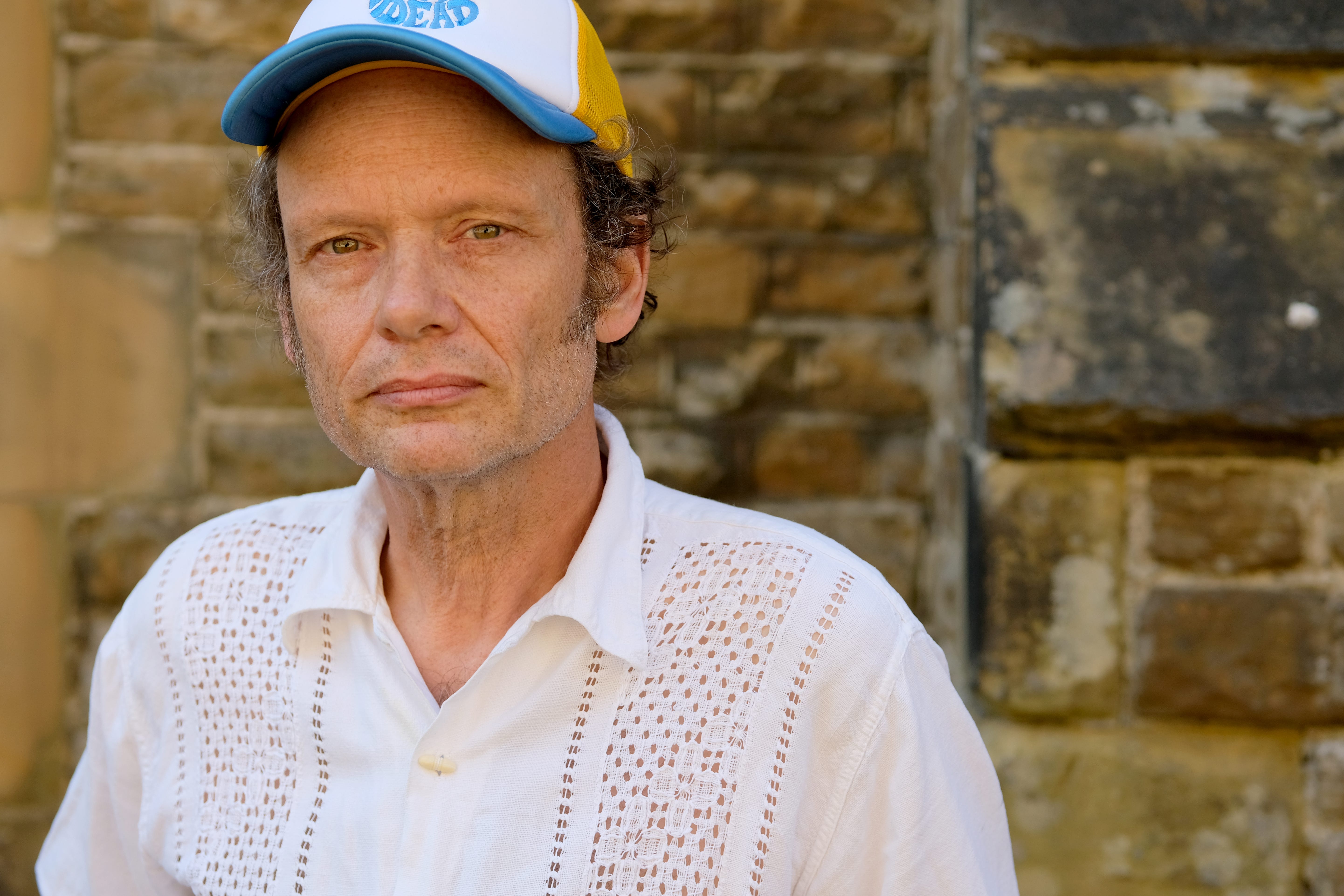
You’ve always been brilliant at developing strong ideas and concepts. This album was originally going to be called Ravilious, but we felt that might be a little too direct, so we settled on Furlongs—the name of Peggy Angus’s house where Ravilious stayed while painting on the South Downs. For many years Ravilious was a somewhat overlooked artist, but over the last couple of decades his work has received much wider recognition. Perhaps it took time because he was such a quiet, distinctly English artist, working outside the major revolutionary art movements happening elsewhere in Europe. As an illustrator, what I find especially fascinating is the way he balanced commercial work with his personal art. I’d be interested to know what his work means to you, and what drew you towards his landscapes and paintings?
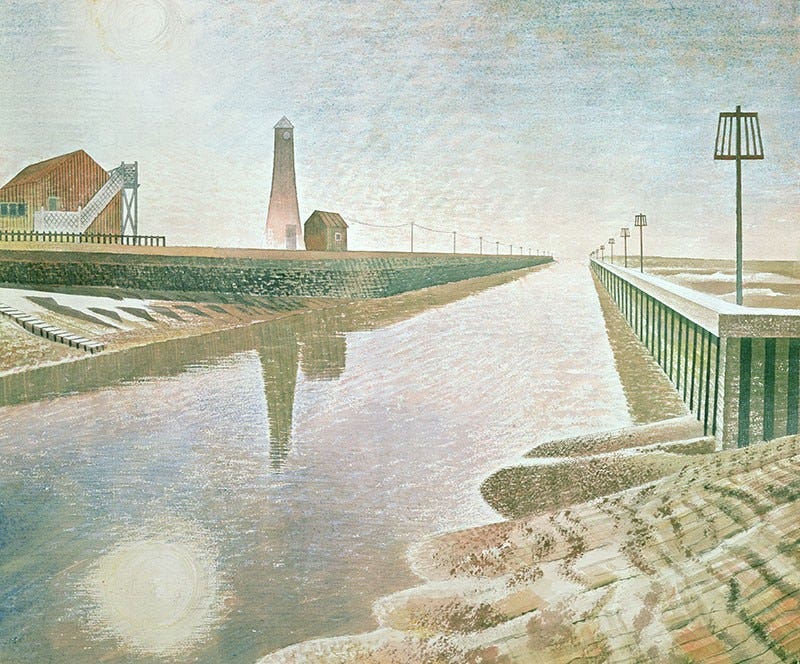
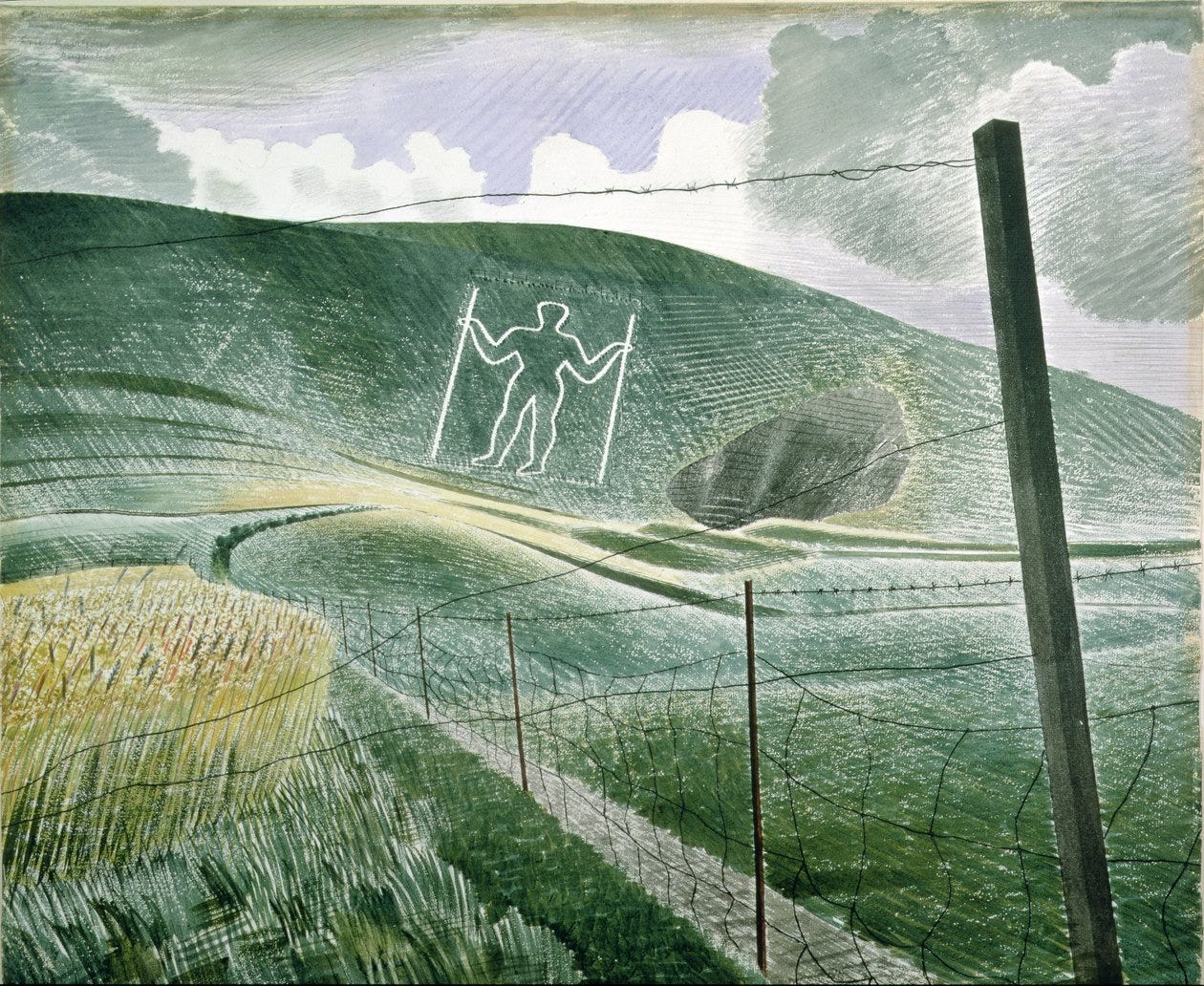
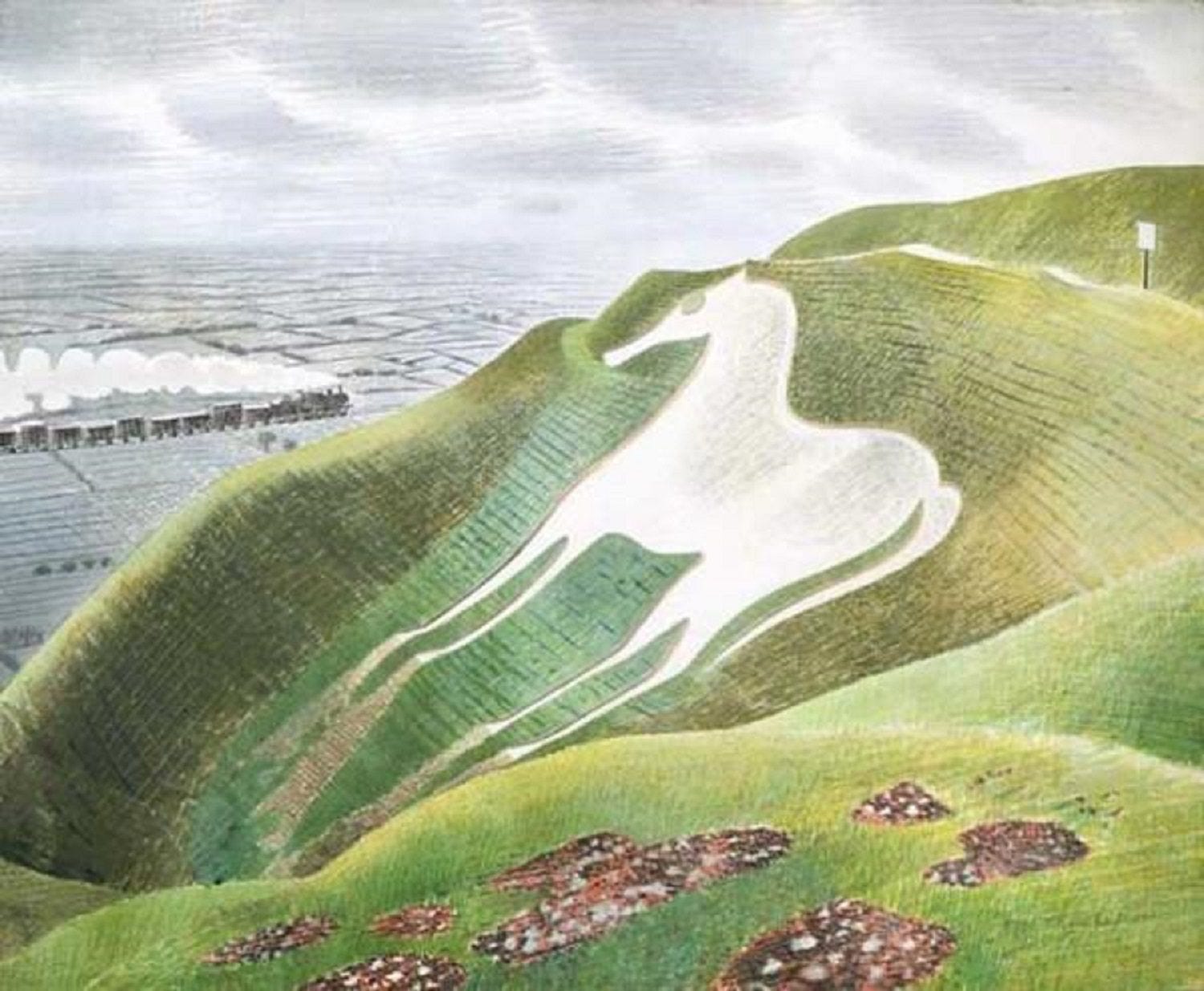
My late father-in-law lived in Hassocks, right at the foot of The Downs, just at the bottom of the hill topped by the black and white windmills, Jack and Jill. We’d visit often when we were still in London and walked on the Downs there quite a lot. I think, before I knew Ravilious’s work, I’d developed a love of the look of that countryside. Those gentle undulations, the soft green, the dusty chalk lines, rutted farm tracks. There’s a natural geometry to The Downs, the way each hill rolls into the next and the way crops form straight lines to contrast with the windswept green parabolas of eroded chalk and the punctuation of gates, fences and hollows. I’m guessing these are the aspects that attracted Eric Ravilious to draw them, and it seems that he managed to distil these scenes into their skeletal, mathematical forms so perfectly that, for years, I have thought of the word “Ravilious” as the perfect adjective to describe them. The first Ravilious painting that I discovered was a view of Rye Harbour that depicts the perfect vanishing point scene looking down the last canal-like stretch of the River Rother with its coastal navigation markers like baskets on poles. It’s pale and delicate and definite and fascinating. This lead to seeking out his work and, of course his Downs pictures. Making this record was not really planned but actually makes perfect sense to me - I love the Downs, love his paintings and being put amongst them for 6 weeks was bound to trigger something!
Thank ye both for this.